As AI reshapes commerce, Unilever's Prashaant Huria talked to CIOnews about building an AI-centric shopping experience, the importance of APIs, and the CPG giant's data transformation.
CIOnews talked to UF Health's Craig Richardville about the importance of a digital foundation in healthcare, deciding when to build and when to buy, and the new mandate for technology leaders.
Chief Information and Product Officer Prat Vemana on why technology leaders are the backbone of organizations, and turning internal excitement over AI into elevated experiences for customers.
With a career spanning oil and gas, retail, IT infrastructure, and consumer packaged goods, CIO News spoke with Scott about what it takes to morph a heritage retailer into a technology company.
As AI thrusts technology even deeper into enterprise operations, IT can no longer just be an order taker. In the past, technology teams typically worked in a silo, and often built or invested in solutions without understanding the specific problems users were trying to solve. This greatly undermined
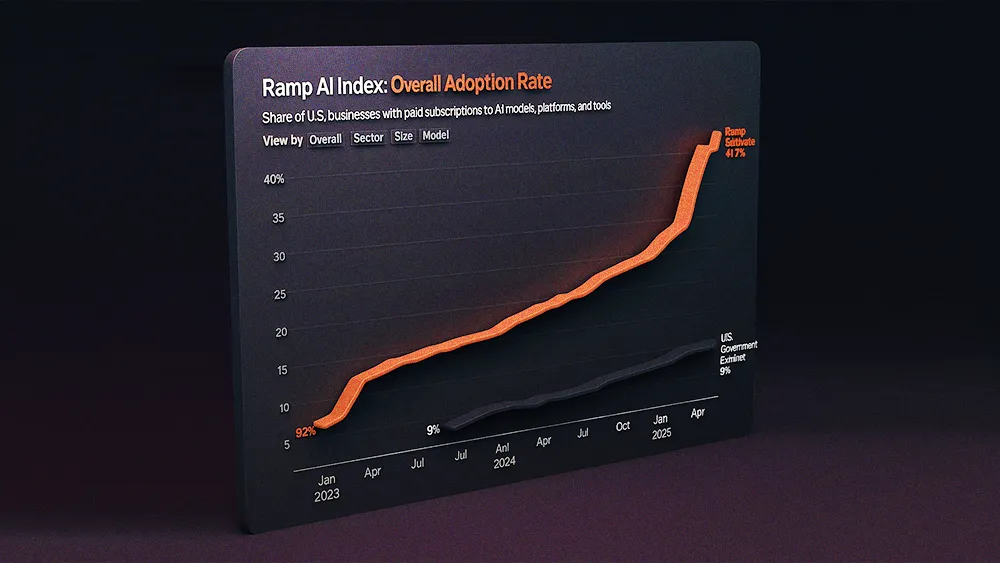
Fintech Ramp's latest spending figures indicate U.S. corporate AI deployment stalled in May, following nearly a year of consistent growth, suggesting businesses are becoming more measured in their AI rollouts: The 41% stall: Ramp's AI Index , analyzing expenditures from over 30,000 U.S. businesses,
It's e-commerce's greatest irony: Brands invest heavily to pinpoint their ideal customers, only to greet them with the same generic storefront as everyone else. The chasm between intelligent acquisition and cookie-cutter experiences sabotages conversion funnels and deflates marketing ROI. Maju Kuruv
Fintech’s rush to bundle everything into sleek, API-driven platforms gives developers a faster path to market. But with every all-in-one solution comes a tradeoff: Convenience often comes at the cost of control. What looks seamless can quickly turn into a walled garden—easy to enter, hard to leave.
Opinion
CIO Commentary, Expert Analysis & IT Leadership Perspectives
While for some companies AI seemed like an overnight sensation, Caterpillar has been using the technology in some capacity for the last three decades, according to Chief Information Officer Jamie Engstrom. Now, the company is only accelerating its use of advanced analytics, automation and orchestrat
As one of the leading consumer goods companies for the last several decades, Procter & Gamble started its AI journey years ago. And now, under Chief Information Officer Seth Cohen, the efforts are intensifying. Notably, P&G’s new “AI Factory” is giving employees in the company access to the cross-fu
Few investment banks have been able to stay at the forefront of the industry in the same way as Goldman Sachs. Now, the Wall Street icon is taking an early lead in the AI race, one that promises to reshape the industry and potentially challenge the dominant status of many leading financial instituti
Eli Potter, VC/PE Executive Advisor and CIO, on why culture and accountability are hard systems inputs to AI transformation, not soft leadership considerations.
Jeff Brzycki, former CIO at Autodesk and VeriSign, on why the integration and control layer that IT has long owned by default is becoming the strategic foundation of the agentic enterprise.
Caroline Carruthers, Chief Executive of Carruthers and Jackson, on why AI governance only works when it changes what people actually do, not what they say.
Meta is reportedly investing nearly $15 billion for a 49% stake in AI data labeling company Scale AI , a move that includes bringing Scale’s CEO Alexandr Wang to Meta to spearhead a new "superintelligence" lab, as first detailed by The Information . The deal aims to accelerate Meta's AGI ambitions a
GenAI is breaking every IT playbook. As systems become less predictable, traditional methods of ensuring trust and control no longer hold up, and xperts in the enterprise stress it's time for a new approach. Jonathan Shertok , Global AI Group Product Manager and Chief of Staff at EY, has spent years
VC Mary Meeker's annual report on internet and enterprise trends takes on AI for 2025, and the change it documents is staggering. A key example: AI-native companies are hitting $100 million in revenue in their first couple of years, as opposed to the five-to-seven year average of traditional SaaS. T
Any business leader with an intense drive to innovate feels like they should be moving faster, smarter, and more strategically . The subtle art of allowing oneself to feel "behind" or underachieving is the innate value that makes success possible. In the age of AI, it's easy to think that every orga
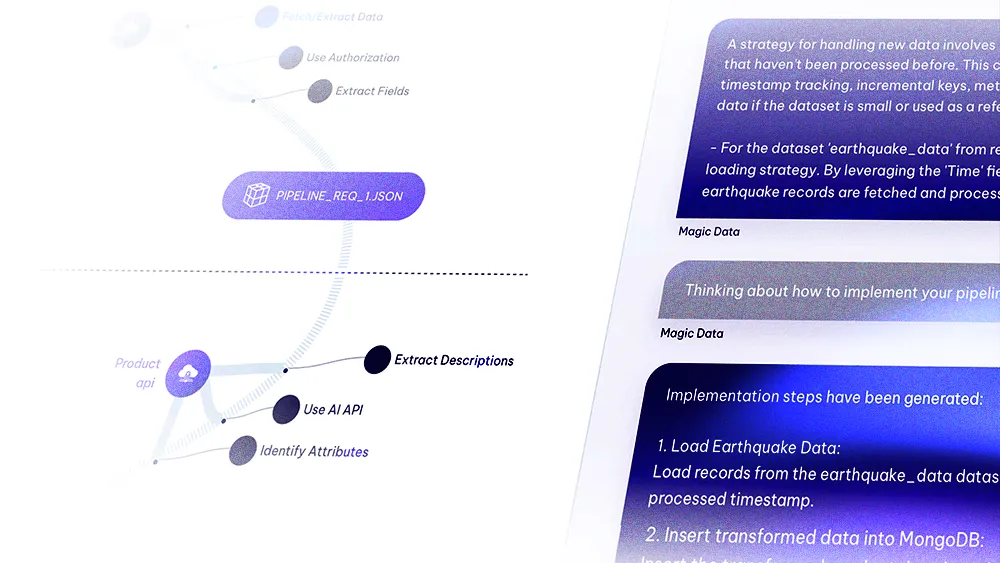
The modern data stack promised a revolution: a data renaissance where insights would flow as freely as oil . Billions were poured into data warehouses and tools to manage it all. But the promise of lightning-fast insights and seamless automation has remained elusive, with timelines still measured in
Enterprise AI has a branding problem. It’s seen as a black box—opaque, unexplainable, and risky. In reality, most systems today are grey boxes: transparent enough to build with, trust, and refine. Greg Makowski , Chief Data Scientist at Ccube , sees the “black box” narrative as outdated. With decade
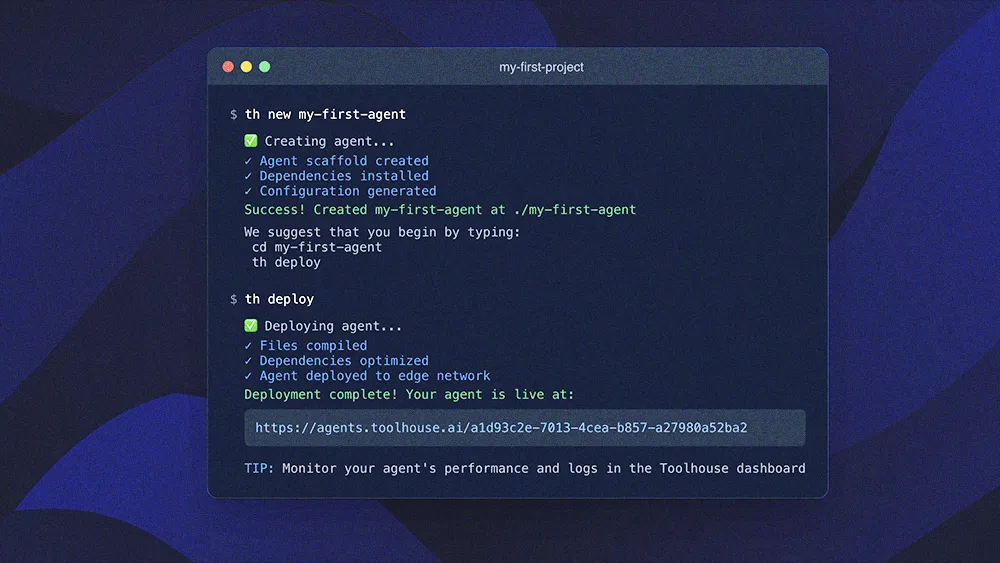
The future of AI isn't plug-and-play. As intelligent agents move toward real autonomy, developers are stuck in a messy middle—grappling with legacy systems, scattered standards, and a fragmented digital stack. Daniele Bernardi , Co-Founder and CEO of Toolhouse and a veteran product leader for Twitte
CIOnews
The community for AI-era CIOs and technology leaders.
Stories are on the way — this site is ready for publishing.